
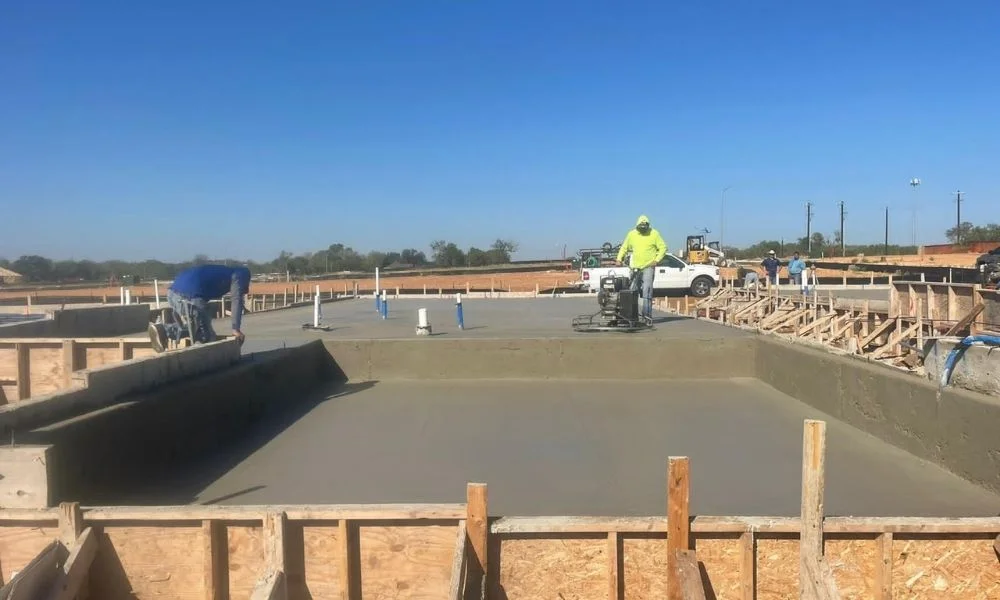
Seasonal timing affects concrete curing quality, contractor availability, and project costs throughout the year. Temperature and moisture conditions during pouring directly influence long-term concrete strength and surface quality. concrete patio contractor scheduling decisions consider these seasonal factors, determining when installations produce optimal results. Wrong timing creates curing problems requiring expensive corrections.
Spring installation advantages
Spring provides the best conditions for installing concrete patios in many areas. It is possible for concrete to crack when it is exposed to heat or cold. The ideal temperature for hydrating concrete is fifty to eighty-five degrees Fahrenheit. It is protected from drying out too quickly in summer and freezing damage in winter by this method. Any spring work should begin with a soil test conducted after winter. It is essential to prepare the base before preparing frost-heaved ground. Late frost is avoided by contractors by planning spring projects carefully. Freshly poured concrete can be harmed by cold nights. Homeowners should book contractors early in winter.
Summer heat challenges
High summer temperatures make concrete dry too fast and cause problems because water leaves the mixture before it has fully hardened. In addition to making the concrete dusty and less durable, rapid moisture loss weakens the top layer and cracks the concrete. The work is usually finished before the hottest part of the day by contractors pouring concrete in the morning. A special liquid is also used to slow down the loss of water from fresh concrete during hot and windy days. Shade structures over fresh concrete prevent direct sun exposure that dramatically increases surface temperatures beyond ambient air readings. Summer contractor scheduling faces peak demand competition from multiple project types, reducing availability and sometimes increasing pricing compared to shoulder season bookings when demand drops, and contractors compete more aggressively for available work.
Fall optimal conditions
- Moderate fall temperatures between 50 and 75 degrees support quality curing without summer heat complications
- Contractor availability improves during the fall as peak summer demand subsides, allowing better scheduling flexibility
- Pricing sometimes decreases during the fall as contractors seek to fill remaining calendar spots before winter slowdowns
- Ground temperatures stay warm from the summer months, supporting proper base conditions for installation work
- An extended curing time before winter freeze-thaw cycles strengthens concrete before the first seasonal temperature stress occurs
Winter installation restrictions
Freezing temperatures prevent concrete patio installations in most climates since water in fresh concrete expands when freezing destroys the internal structure before strength develops. Concrete must maintain temperatures above 50 degrees for a minimum of three days after pouring, allowing initial strength development, and preventing freeze damage. Cold-weather additives accelerate curing, reducing freezing vulnerability of windows, but add material costs and require careful monitoring. Heated enclosures covering fresh concrete maintain required temperatures during extreme cold, but add significant project costs, making winter installations expensive compared to favourable season alternatives. Contractors in cold climates stop outdoor concrete work from November through March, limiting available installation windows to seven or eight months annually. This compressed schedule creates competitive booking situations where popular contractors fill calendars quickly during favourable months, requiring planning to secure preferred installation timing before competitor bookings eliminate preferred scheduling options.
Seasonal timing matters because spring and fall offer optimal curing temperatures supporting quality results, summer heat requires special precautions, adding complexity and cost, and winter freezing prevents installations entirely in most climates, creating compressed booking windows demanding advance contractor scheduling.
