
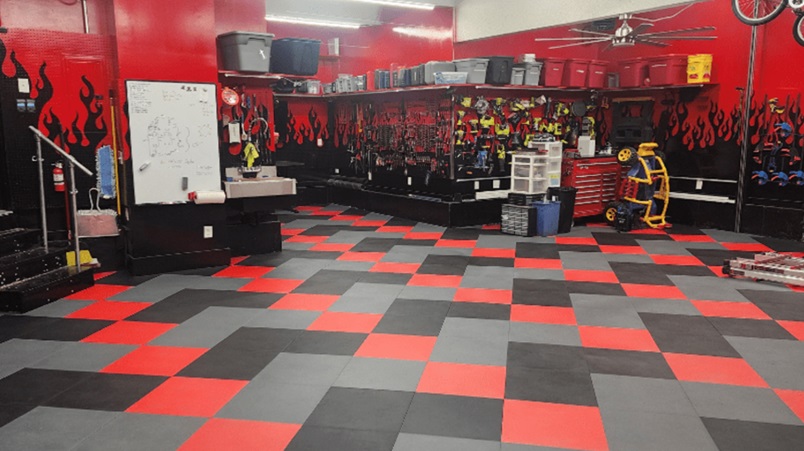
Garage floors are no longer an afterthought in modern home improvement plans. As more homeowners and commercial users prioritize aesthetics and functionality, two popular options dominate the conversation: epoxy coatings and garage floor tiles. While both offer a cleaner, more durable surface than bare concrete, the differences in installation, durability, cost, and appearance are significant. Choosing the right solution depends on your goals, budget, and long-term expectations.
Material Composition and Application
Epoxy coatings are a liquid-applied solution made from a two-part resin and hardener system. Once mixed and applied to a prepared concrete surface, the mixture cures into a hard, chemically resistant surface. It’s a permanent coating that bonds directly to the concrete substrate. In contrast, garage floor tiles are modular panels made of heavy-duty plastic, rubber, or polyvinyl chloride (PVC). These tiles are installed over the concrete using an interlocking system, making them removable and replaceable. The floor is essentially floating, meaning it doesn’t chemically adhere to the concrete base. While epoxy forms a single continuous surface, tiles consist of multiple pieces that can be swapped out individually if damaged or stained.
Durability and Performance
Both options provide solid durability, but the context matters. Epoxy coatings are resistant to oil, chemicals, abrasion, and impact—ideal for heavy-duty automotive use and industrial garages. However, they are vulnerable to issues like hot tire pickup or chipping if the surface is poorly prepared or if a low-grade product is used. Garage floor tiles, especially PVC types, offer excellent resistance to impact, heavy loads, and chemical spills. Because the tiles aren’t bonded to the concrete, they are less likely to crack under pressure or temperature fluctuation. They also add a slight cushioning effect, reducing fatigue for those standing or working in the garage for extended periods.
Aesthetic Versatility
Epoxy coatings offer a seamless, high-gloss finish that looks professional and clean. You can customize it with flakes, metallic pigments, or color variations to match your garage’s design. Garage floor tiles bring flexibility in design. They come in various patterns, colors, and textures, allowing you to create checkerboard layouts or zone-specific areas. However, the seams between tiles may be more noticeable and can collect dirt over time. If a seamless look is important to you, epoxy coatings have the edge. If you prefer modular customization, tiles are more versatile.
Installation Time and Maintenance
Installing an epoxy floor is a labor-intensive process that requires surface prep, priming, mixing, and curing, often spanning several days. Professional application is strongly recommended to avoid adhesion issues. In contrast, garage floor tiles can typically be installed in a few hours with no adhesives, fumes, or curing time. If a tile gets damaged, it can be replaced without redoing the entire floor. In terms of maintenance, epoxy is easy to clean but must be protected from scratches and UV exposure. Tiles may trap debris between seams but are easier to lift clean underneath, and reassemble.
Conclusion
The right choice between epoxy coatings and garage floor tiles depends on your specific use case, design goals, and installation preference. Epoxy delivers a sleek, industrial-grade surface ideal for permanent protection and a polished look. Garage floor tiles, on the other hand, provide modular flexibility, comfort underfoot, and ease of maintenance. For optimal results, consult with flooring professionals to determine which system aligns best with your long-term garage usage needs.